Chapter 5 Section Review Questions Describe How Violence Affects Us
14.5 War and Terrorism
Learning Objectives
- Distinguish international state of war and civil war.
- List the major types of terrorism.
- Evaluate the police enforcement and structural-reform approaches for dealing with terrorism.
War and terrorism are both forms of armed conflict that aim to defeat an opponent. Although war and terrorism have been part of the homo experience for thousands of years, their manifestation in the contemporary era is peculiarly frightening, cheers to evermore powerful weapons, including nuclear artillery, that threaten man existence. Because governments play a fundamental role in both war and terrorism, a full understanding of politics and government requires examination of central aspects of these two forms of armed conflict. We kickoff with war then turn to terrorism.
War
Wars occur both between nations and inside nations, when 2 or more factions engage in armed conflict. War between nations is chosen international war, while war within nations is called civil war. The most famous ceremonious state of war to Americans, of class, is the American Civil War, also chosen the War Between the States, that pitted the North against the South from 1861 through 1865. More than than 600,000 soldiers on both sides died on the battlefield or from disease, a number that exceeds American deaths in all the other wars the U.s.a. has fought. More than 100 meg soldiers and civilians are estimated to have died during the international and civil wars of the 20th century (Leitenberg, 2006). Many novels and films depict the heroism with which soldiers fight, while other novels and films show the horror that war entails. Equally Sydney H. Schanberg (2005), a former New York Times reporter who covered the wars in Vietnam and Cambodia, has bluntly observed, "'History,' Hegel said, 'is a slaughterhouse.' And state of war is how the slaughter is carried out."
Explaining War
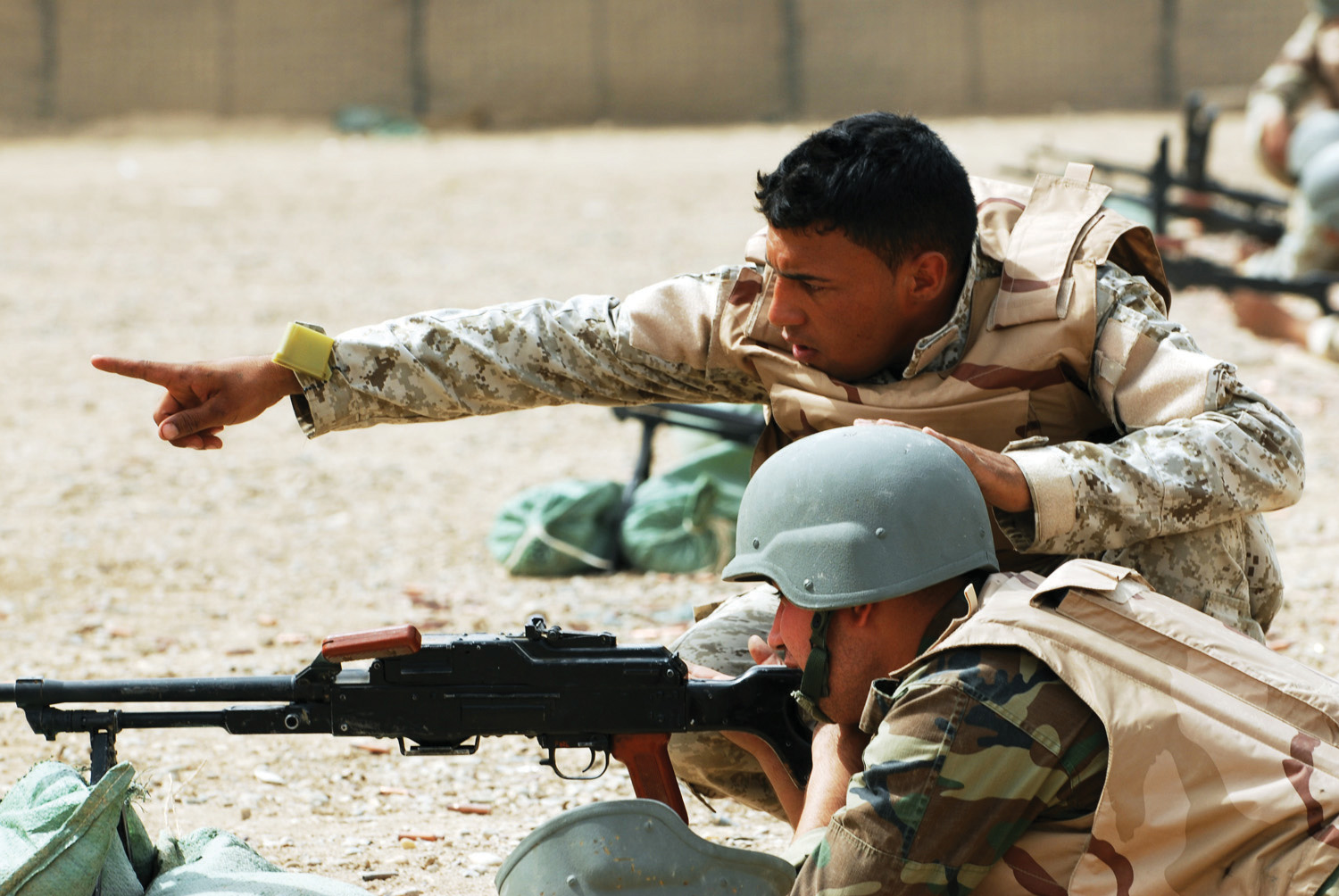
Scholars accept attempted to explain why human being beings wage state of war. A popular caption comes from the field of evolutionary biological science and claims that a tendency toward warfare is hardwired into our genetic heritage because it conferred sure evolutionary advantages.
The enormity of war has stimulated scholarly interest in why humans wage state of war. A popular caption for war derives from evolutionary biology. Co-ordinate to this statement, war is role of our genetic heritage because the humans who survived tens of thousands of years ago were those who were almost able, past virtue of their temperament and physicality, to take needed resources from other humans they attacked and to defend themselves from attackers. In this way, a genetic trend for physical aggression and warfare developed and thus yet exists today. In support of this evolutionary statement, some scientists notation that chimpanzees and other primates also engage in group assailment against others of their species (Wrangham, 2004).
Withal, other scientists dispute the evolutionary explanation for several reasons (Begley, 2009; Roscoe, 2007). Start, the human encephalon is far more advanced than the brains of other primates, and genetic instincts that might drive their behavior do not necessarily drive homo beliefs. Second, many societies studied past anthropologists have been very peaceful, suggesting that a tendency to warfare is more cultural than biological. Third, near people are not tearing, and most soldiers take to be resocialized (in boot camp or its equivalent) to overcome their deep moral convictions against killing; if warlike tendencies were part of human genetic heritage, these convictions would not exist.
If warfare is not biological in origin, then information technology is best understood as a social phenomenon, one that has its roots in the decisions of political and military officials. Sometimes, equally with the U.Southward. archway into World War Two afterward Pearl Harbor, these decisions are sincere and based on a perceived necessity to defend a nation's people and resource, and sometimes these decisions are based on cynicism and deceit. A prime example of the latter dynamic is the Vietnam State of war. The 1964 Gulf of Tonkin Resolution, in which Congress authorized President Lyndon Johnson to wage an undeclared state of war in Vietnam, was passed after N Vietnamese torpedo boats allegedly attacked U.S. ships. Notwithstanding, later investigation revealed that the attack never occurred and that the White House lied to Congress and the American people (Wells, 1994). 4 decades later, questions of possible deceit were raised after the United states of america began the state of war confronting Iraq because of its alleged possession of weapons of mass devastation. These weapons were never found, and critics charged that the White House had fabricated and exaggerated evidence of the weapons in order to win public and congressional support for the war (Danner, 2006).
The Cost of State of war
Beyond its human cost, war also has a heavy financial cost. From 2003 through 2010, the war in Iraq cost the United States some $750 billion (O'Hanlon & Livingston, 2010); from 2001 through 2010, the war in Afghanistan cost the United states more $300 billion (Mulrine, 2010). These two wars thus toll almost $1.1 trillion combined, for an average of $100 billion per year during this flow. This same yearly amount could accept paid for one twelvemonth'southward worth (California figures) of all the following (National Priorities Project, 2010):
- 231,000 police officers,
- eleven.iv meg children receiving low-income health care (Medicaid),
- two.6 million students receiving full tuition scholarships at country universities,
- 2.5 1000000 Head Start slots for children, and
- 280,000 elementary schoolhouse teachers.
These trade-offs bring to mind President Eisenhower's famous observation, quoted in Chapter 13 "Work and the Economic system", that "every gun that is made, every warship launched, every rocket fired, signifies in the final sense, a theft from those who hunger and are not fed, those who are common cold and are not clothed." State of war indeed has a heavy human being cost, not simply in the numbers of dead and wounded, just also in the diversion of funds from of import social functions.
Terrorism
Terrorism is hardly a new miracle, but Americans became horrifyingly familiar with it on September 11, 2001, when about 3,000 people died after planes hijacked past Middle Eastern terrorists crashed into the World Trade Center, the Pentagon, and a field in Pennsylvania. The attacks on ix/xi remain in the nation's consciousness, and many readers may know someone who died on that terrible day. The attacks as well spawned a vast national security network that now reaches into near every attribute of American life. This network is so secretive, so huge, and so expensive that no one really knows precisely how large information technology is and how much it costs (Priest & Arkin, 2010). Questions of how best to deal with terrorism go on to be debated, and there are few, if whatsoever, piece of cake answers to these questions.
Non surprisingly, sociologists and other scholars have written many articles and books about terrorism. This department draws on their work to discuss the definition of terrorism, the major types of terrorism, explanations for terrorism, and strategies for dealing with terrorism. An understanding of all these problems is essential to make sense of the concern and controversy about terrorism that exists throughout the world today.
Defining Terrorism
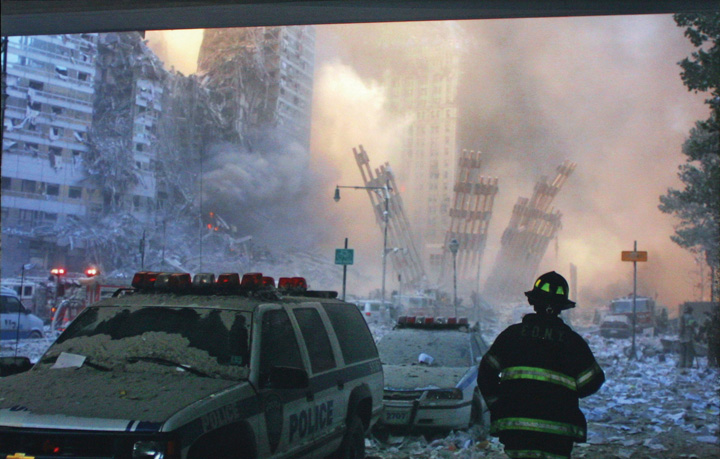
Every bit the attacks on 9/11 remind us, terrorism involves the utilize of indiscriminate violence to instill fright in a population and thereby win certain political, economical, or social objectives.
There is an old saying that "ane person's liberty fighter is another person's terrorist." This saying indicates one of the defining features of terrorism but also some of the problems in coming up with a precise definition of it. Some years ago, the Irish Republican Army (IRA) waged a campaign of terrorism against the British regime and its people as part of its effort to drive the British out of Northern Ireland. Many people in Northern Ireland and elsewhere hailed IRA members as liberty fighters, while many other people condemned them as cowardly terrorists. Although near of the world labeled the nine/11 attacks as terrorism, some individuals applauded them as acts of heroism. These examples indicate that at that place is only a thin line, if any, between terrorism on the one manus and freedom fighting and heroism on the other paw. Just as beauty is in the eyes of the beholder, and then is terrorism. The same blazon of activity is either terrorism or freedom fighting, depending on who is characterizing the activity.
Although dozens of definitions of terrorism exist, nearly take into account what are widely regarded as the 3 defining features of terrorism: (a) the use of violence; (b) the goal of making people agape; and (c) the desire for political, social, economic, and/or cultural change. A popular definition by political scientist Ted Robert Gurr (1989, p. 201) captures these features: "the use of unexpected violence to intimidate or coerce people in the pursuit of political or social objectives."
Types of Terrorism
When we think virtually this definition, ix/xi certainly comes to listen, just there are, in fact, several kinds of terrorism—based on the identity of the actors and targets of terrorism—to which this definition applies. A typology of terrorism again by Gurr (1989) is pop: (a) vigilante terrorism, (b) insurgent terrorism, (c) transnational (or international) terrorism, and (d) state terrorism.
Vigilante terrorism is committed by individual citizens confronting other individual citizens. Sometimes the motivation is racial, ethnic, religious, or other hatred, and sometimes the motivation is to resist social change. The violence of racist groups like the Ku Klux Klan was vigilante terrorism, as was the violence used for more than two centuries by white Europeans against Native Americans. What we now phone call "hate crime" is a contemporary example of vigilante terrorism.
Insurgent terrorism is committed by private citizens confronting their ain government or against businesses and institutions seen as representing the "establishment." Insurgent terrorism is committed by both left-fly groups and right-wing groups and thus has no political connotation. U.Southward. history is filled with insurgent terrorism, starting with some of the actions the colonists waged against British forces before and during the American Revolution, when "the meanest and nearly squalid sort of violence was put to the service of revolutionary ideals and objectives" (Dark-brown, 1989, p. 25). An example here is tarring and feathering: hot tar and and so feathers were smeared over the unclothed bodies of Tories. Some of the labor violence committed later on the Civil War also falls under the category of insurgent terrorism, as does some of the violence committed by left-wing groups during the 1960s and 1970s. A relatively recent instance of right-wing insurgent terrorism is the infamous 1995 bombing of the federal edifice in Oklahoma City by Timothy McVeigh and Terry Nichols that killed 168 people.
Transnational terrorism is committed past the citizens of one nation against targets in another nation. This is the type that has well-nigh concerned Americans at to the lowest degree since nine/11, nevertheless 9/xi was not the commencement time Americans had been killed by international terrorism. A decade before, a truck bombing at the Globe Trade Centre killed 6 people and injured more than 1,000 others. In 1988, 189 Americans were among the 259 passengers and crew who died when a plane bound for New York exploded over Lockerbie, Scotland; agents from Libya were widely thought to accept planted the flop. Despite all these American deaths, transnational terrorism has actually been much more common in several other nations: London, Madrid, and various cities in the Middle East have frequently been the targets of international terrorists.
State terrorism involves violence by a government that is meant to frighten its ain citizens and thereby stifle their dissent. State terrorism may involve mass murder, assassinations, and torture. Whatever its form, country terrorism has killed and injured more people than all the other kinds of terrorism combined (Wright, 2007). Genocide, of course is the virtually deadly blazon of state terrorism, but land terrorism also occurs on a smaller scale. As just one example, the fierce response of Southern white law enforcement officers to the civil rights protests of the 1960s amounted to country terrorism, every bit officers murdered or beat hundreds of activists during this period. Although state terrorism is usually linked to disciplinarian regimes, many observers say that the U.South. authorities too engaged in state terror during the 19th century, when U.S. troops killed thousands of Native Americans (Brown, 1971).
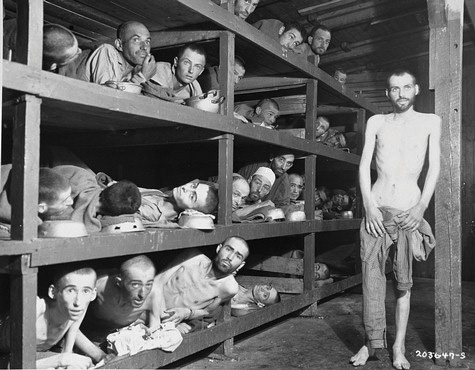
Genocide is the most deadly blazon of state terrorism. The Nazi holocaust killed some 6 million Jews and half dozen 1000000 other people.
Explaining Terrorism
Why does terrorism occur? It is easy to assume that terrorists must have psychological issues that lead them to take sadistic personalities, and that they are merely acting irrationally and impulsively. However, virtually scholars hold that terrorists are psychologically normal despite their murderous violence and, in fact, are little unlike from other types of individuals who use violence for political ends. As one scholar observed,
Most terrorists are no more or less fanatical than the immature men who charged into Wedlock cannonfire at Gettysburg or those who parachuted behind German lines into France. They are no more or less savage and coldblooded than the Resistance fighters who executed Nazi officials and collaborators in Europe, or the American GI's ordered to "pacify" Vietnamese villages. (Rubenstein, 1987, p. five)
Contemporary terrorists tend to come from well-to-practice families and to be well-educated themselves; ironically, their social backgrounds are much more advantaged in these respects than are those of common street criminals, despite the violence they commit.
If terrorism cannot be said to stem from individuals' psychological problems, then what are its roots? In answering this question, many scholars say that terrorism has structural roots. In this view, terrorism is a rational response, no matter horrible information technology may exist, to perceived grievances regarding economical, social, and/or political conditions (LaFree & Dugan, 2009). The heads of the U.S. 9/eleven Commission, which examined the terrorist attacks of that day, reflected this view in the following assessment:
We confront a rising tide of radicalization and rage in the Muslim world—a tendency to which our own deportment have contributed. The enduring threat is not Osama bin Laden but young Muslims with no jobs and no hope, who are angry with their own governments and increasingly see the U.s. as an enemy of Islam. (Kean & Hamilton, 2007, p. B1)
As this assessment indicates, structural weather condition do not justify terrorism, of course, but they do help explain why some individuals decide to commit it.
Stopping Terrorism
Efforts to cease terrorism accept 2 forms (White, 2012). The commencement form involves attempts to capture known terrorists and to destroy their camps and facilities and is commonly called a law enforcement or military approach. The second form stems from the recognition of the structural roots of terrorism only described and is oftentimes called a structural-reform approach. Each arroyo has many advocates amid terrorism experts, and each approach has many critics.
Law enforcement and military efforts take been known to weaken terrorist forces, but terrorist groups have persisted despite these measures. Worse yet, these measures may ironically inspire terrorists to commit further terrorism and increase public support for their cause. Critics too worry that the military machine approach endangers ceremonious liberties, as the contend over the U.S. response to terrorism since 9/11 and then vividly illustrates (Cole & Lobel, 2007). This debate took an interesting turn in tardily 2010 amid the increasing apply of drome scanners that generate body images. Many people criticized the scanning every bit an invasion of privacy, and they also criticized the invasiveness of the "pat-down" searches that were used for people who chose not to be scanned (Reinberg, 2010).
In view of all these bug, many terrorism experts instead favor the structural-reform approach, which they say can reduce terrorism by improving or eliminating the weather that give rise to the discontent that leads individuals to commit terrorism. Here again the assessment of the heads of the 9/eleven Commission illustrates this view:
We must use all the tools of U.S. power—including foreign help, educational assist and vigorous public diplomacy that emphasizes scholarship, libraries and exchange programs—to shape a Middle Due east and a Muslim earth that are less hostile to our interests and values. America'due south long-term security relies on being viewed non equally a threat but as a source of opportunity and promise. (Kean & Hamilton, 2007, p. B1)
Fundamental Takeaways
- War takes an enormous homo and financial toll. Many critics dispute the evolutionary statement that a tendency toward warfare is hardwired into human genetics.
- Terrorism involves the use of intimidating violence to achieve political ends. Whether a given act of violence is perceived as terrorism or as freedom fighting oftentimes depends on whether someone approves of the goal of the violence.
- The constabulary enforcement/military approach to countering terrorism may weaken terrorist groups, just it also may increase their volition to fight and popular support for their cause and endanger civil liberties.
For Your Review
- Do y'all think the evolutionary explanation of warfare makes sense? Why or why non?
- Which means of countering terrorism practice you prefer more than, the law enforcement/military machine arroyo or the structural-reform approach? Explain your reply.
Toward a More Perfect Union: What Sociology Suggests
Sociological theory and research are once again relevant for addressing certain bug raised past studies of politics and authorities. Several issues especially come to mind.
The outset is the possible monopolization and misuse of power past a relatively small elite composed of the powerful or the "haves," every bit they are often chosen. If aristocracy theories are right, this small elite takes reward of its place at the height of American social club and its concomitant wealth, power, and influence to benefit its own interests. Sociological work that supports the assumptions of elite theories does non necessarily imply any specific measures to reduce the aristocracy'southward influence, but it does suggest the need for consumer groups and other public-involvement organizations to remain vigilant virtually elite misuse of power and to undertake efforts to minimize this misuse.
The 2nd event is the lack of political participation from the segments of American order that traditionally accept very picayune power: the poor, the uneducated, and people of colour. Because voting and other forms of political participation are much more than common among the more educated and wealthy segments of society, the relative lack of participation by those without power helps ensure that they remain without ability. Sociological inquiry on political participation thus underscores the demand to promote voting and other political participation by the poor and uneducated if American autonomous and egalitarian ideals are to exist achieved. This need too applies to reversing the disenfranchisement of felons, as discussed in the "Sociology Making a Difference" box that appeared earlier in this affiliate.
A third issue is how all-time to counter terrorism. Folklore's emphasis on the need to accost the structural roots of social issues has been a theme of this book and was first highlighted in the discussion of the sociological imagination in Affiliate ane "Sociology and the Sociological Perspective". This emphasis is reflected in the structural-reform strategy for countering terrorism discussed in Chapter xiv "Politics and Regime", Section 14.v "War and Terrorism". Efforts to counter terrorism that do not address the structural conditions underlying many acts of terrorism ultimately help ensure that new acts of terrorism will arise. To say this is not meant to excuse or justify whatever terrorism, but it is meant to recognize an important reality that must exist kept in mind as the earth continues to bargain with the threat of terrorism.
References
Begley, S. (2009, June 29). Don't blame the caveman. Newsweek 52–62.
Brown, D. A. (1971). Bury my eye at Wounded Knee: An Indian history of the American West. New York, NY: Holt, Rinehart and Winston.
Brown, R. Grand. (1989). Historical patterns of violence. In T. R. Gurr (Ed.), Violence in America: Protest, rebellion, reform (Vol. ii, pp. 23–61). Newbury Park, CA: Sage.
Cole, D., & Lobel, J. (2007). Less safe, less complimentary: Why America is losing the state of war on terror. New York, NY: New Press.
Danner, M. (2006). The hole-and-corner way to state of war: The Downing Street memo and the Iraq War's buried history. New York, NY: New York Review of Books.
Gurr, T. R. (1989). Political terrorism: Historical antecedents and contemporary trends. In T. R. Gurr (Ed.), Violence in America: Protestation, rebellion, reform (Vol. 2, pp. 201–230). Newbury Park, CA: Sage.
Kean, T. H., & Hamilton, L. H. (2007, September 9). Are we safer today? The Washington Mail, p. B1.
LaFree, G., & Dugan, 50. (2009). Enquiry on terrorism and countering terrorism. Offense and Justice: A Review of Enquiry, 39, 413–477.
Leitenberg, M. (2006). Deaths in wars and conflicts in the 20th century. Ithaca, NY: Cornell University Peace Studies Program.
Mulrine, A. (2010, June eleven). Volition cost of Afghanistan State of war become a 2010 entrada issue? U.S.News & World Written report. Retrieved from http://politics.usnews.com/news/articles/2010/2006/2011/will-price-of-afghanistan-war-become-a-2010-campaign-issue.html.
National Priorities Project. (2010). Federal budget trade-offs. Retrieved from http://www.nationalpriorities.org/tradeoffs?location_type=one&land=half dozen&program=707&tradeoff_ item_item=999&submit_tradeoffs=Get+Trade+Off.
O'Hanlon, M. Eastward., & Livingston, I. (2010). Iraq alphabetize: Tracking variables of reconstruction & security in post-Saddam Iraq. Washington, DC: Brookings Establishment.
Priest, D., & Arkin, W. Thousand. (2010, July 20). A hidden world, growing across command. The Washington Post, p. A1.
Reinberg, S. (2010, Nov 23). Airport body scanners safe, experts say. BusinessWeek. Retrieved from http://www.businessweek.com/lifestyle/content/healthday/646395.html.
Roscoe, P. (2007). Intelligence, coalitional killing, and the antecedents of state of war. American Anthropologist, 109(3), 487–495.
Rubenstein, R. E. (1987). Alchemists of revolution: Terrorism in the modern world. New York, NY: Basic Books.
Schanberg, S. H. (2005, May ten). Not a pretty picture. The Village Voice, p. ane.
Wells, T. (1994). The war within: America'due south boxing over Vietnam. Berkeley: University of California Press.
White, J. R. (2012). Terrorism and homeland security: An introduction (7th ed.). Belmont, CA: Wadsworth.
Wrangham, R. W. (2004). Killer species. Daedalus, 133(4), 25–35.
Wright, T. C. (2007). State terrorism in Latin America: Republic of chile, Argentina, and international human rights. Lanham, MD: Rowman & Littlefield.
Source: https://open.lib.umn.edu/sociology/chapter/14-5-war-and-terrorism/
0 Response to "Chapter 5 Section Review Questions Describe How Violence Affects Us"
Post a Comment